Ultrasound has become an essential diagnostic imaging tool in modern healthcare. It is widely used because it provides real-time imaging without ionizing radiation and can be applied across a range of clinical areas, including abdominal, obstetric, gynecological, vascular, and small-parts examinations.
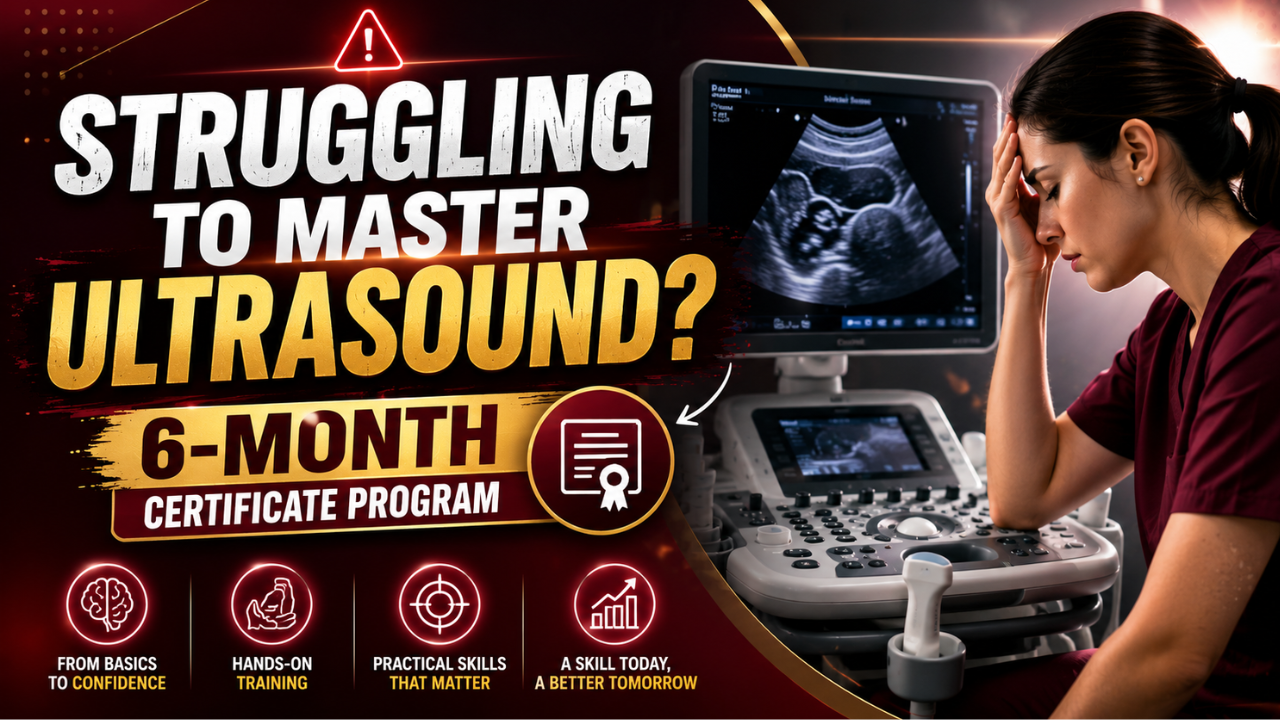
For healthcare professionals and students who want to develop practical knowledge in diagnostic ultrasound without committing to a lengthy degree program, a 6-month certificate program in ultrasound diagnosis can be a valuable option. These programs are generally designed to introduce learners to ultrasound principles, scanning techniques, anatomy, image interpretation, and clinical applications within a focused timeframe.
What Is a 6-Month Certificate Program in Ultrasound Diagnosis?
A 6-month certificate program is a structured training course that aims to build foundational or intermediate skills in diagnostic ultrasound. Depending on the institution and the learner’s professional background, the program may combine theoretical education with practical or clinical training.
Programs can vary considerably in their curriculum and eligibility criteria. For example, some programs are designed specifically for medical graduates, while others may accept candidates from broader healthcare and allied health backgrounds. Some institutions also incorporate supervised practical training or clinical attachments as part of the learning experience.
Because the title “6-month certificate” can refer to different types of programs, prospective students should always check the institution’s curriculum, entry requirements, certification status, and practical training arrangements before enrolling.
Why Choose a 6-Month Ultrasound Program?
One of the biggest advantages of a six-month program is its focused duration. Instead of spending several years completing a full academic qualification, learners can dedicate a shorter period to developing specialized knowledge in ultrasound.
A well-structured program may help students:
- Understand the fundamental principles of diagnostic ultrasound
- Learn about ultrasound physics and instrumentation
- Develop knowledge of relevant anatomy and physiology
- Understand basic scanning protocols
- Improve image optimization skills
- Learn about common ultrasound findings and pathologies
- Develop familiarity with ultrasound terminology and reporting
- Gain exposure to practical scanning techniques
- Build a foundation for further professional education
However, completing a certificate does not automatically make someone qualified to practice independently in every country or healthcare system. Professional scope of practice, licensing, registration, and employment requirements vary by jurisdiction. Students should verify these requirements before choosing a program.
What Do You Learn During a 6-Month Ultrasound Certificate?
The exact curriculum differs from one institution to another, but many programs cover a combination of theoretical concepts and clinical applications.
1. Ultrasound Physics and Instrumentation
Students are introduced to the basic science behind ultrasound imaging. Topics may include sound waves, frequency, transducers, image formation, resolution, gain, depth, artifacts, and machine controls.
Understanding these concepts is important because ultrasound is highly operator-dependent. A strong understanding of the equipment helps learners optimize images and recognize when an apparent abnormality may be related to technique or artifact.
2. Anatomy and Physiology
A strong foundation in anatomy is essential for ultrasound. Students learn to identify normal structures and understand their expected appearance on ultrasound images.
Depending on the program, this may include abdominal organs, pelvic structures, reproductive organs, urinary structures, and other commonly examined anatomical regions.
3. Abdominal Ultrasound
Abdominal scanning is commonly included in ultrasound education. Students may study the ultrasound appearance of organs such as the liver, gallbladder, pancreas, spleen, kidneys, and urinary bladder.
The curriculum may also introduce common abnormalities and the sonographic features that can help distinguish normal findings from suspected pathology.
4. Obstetric and Gynecological Ultrasound
Many certificate programs introduce learners to obstetric and gynecological ultrasound. Topics can include pelvic anatomy, early pregnancy assessment, fetal biometry, and basic obstetric scanning principles.
Some programs provide more extensive training in this area, while others cover it only at a foundational level.
5. Small Parts and Superficial Structures
Depending on the program, learners may also be introduced to small-parts examinations involving structures such as the thyroid, breast, scrotum, or superficial soft tissues.
These areas require careful scanning technique and knowledge of normal anatomy to identify potentially significant findings.
6. Doppler Ultrasound
Doppler is an important component of modern ultrasound practice. Students may be introduced to color Doppler, spectral Doppler, and the basic principles of evaluating blood flow.
The depth of Doppler training varies significantly between certificate programs, so students interested in vascular or advanced Doppler applications should carefully review the curriculum before enrolling.
7. Ultrasound Artifacts and Image Optimization
Artifacts are a key part of ultrasound interpretation. A good training program should help learners understand common artifacts and how they can affect image interpretation.
Students may learn how to optimize depth, gain, focus, frequency, and other machine settings to obtain clearer diagnostic images.
The Importance of Practical Training
One of the most important factors to consider when choosing a 6-month ultrasound program is the balance between theory and practical learning.
Ultrasound is a hands-on skill. Reading textbooks and watching demonstrations can provide valuable knowledge, but developing scanning skills requires practical experience under appropriate supervision.
Some certificate programs use blended learning models, where theoretical content is taught online while practical training takes place through supervised clinical attachments. Other programs are delivered primarily in person.
Before enrolling, prospective students should ask:
- How much practical training is included?
- Is hands-on scanning available?
- Are clinical sessions supervised?
- What ultrasound systems are available for practice?
- How many students are assigned to each machine?
- Does the program include case-based learning?
- Is reporting practice included?
These questions can help students determine whether a program offers meaningful practical exposure rather than focusing only on classroom theory.
Who Should Consider a 6-Month Ultrasound Certificate?
Eligibility varies from one institution to another. Some programs may be intended for medical doctors and other registered healthcare professionals, while others may accept candidates with relevant science or allied health backgrounds.
For example, published programs in Pakistan demonstrate significant variation in admission criteria, ranging from MBBS-focused programs to certificate programs that also consider candidates from nursing, allied health, or imaging backgrounds.
Therefore, applicants should carefully review the eligibility requirements of each institution before applying.
How to Choose the Right Program
Choosing an ultrasound certificate program should involve more than simply comparing course duration or fees. Consider the following factors:
Curriculum
Look for a curriculum that covers the areas relevant to your career goals. If you want to focus on general ultrasound, make sure the program includes core abdominal, pelvic, and obstetric topics. If you are interested in advanced practice, look for additional exposure to Doppler, small parts, MSK, or other specialties.
Practical Exposure
Prioritize programs that provide meaningful hands-on training and supervised clinical experience where applicable.
Faculty
Consider the qualifications and clinical experience of the instructors. Learning from experienced professionals can help students connect theoretical concepts with real-world clinical practice.
Certification
Understand exactly what certificate you will receive and who awards it. A certificate’s recognition and professional value can vary depending on the issuing institution and the regulations of the country where you intend to work.
Career Goals
Think about where you want your training to take you. If your goal is to work in a specific country, research its licensing and professional requirements before selecting a program.
Learning Format
Some learners prefer classroom-based education, while others need flexible online or blended learning options. Choose a format that fits your schedule without compromising the practical component of ultrasound training.
What Career Opportunities Can Follow Ultrasound Training?
Ultrasound skills can be relevant across multiple healthcare environments, including hospitals, diagnostic imaging centers, clinics, and specialized departments.
Depending on the individual’s prior professional qualification, local regulations, and scope of practice, ultrasound training may support career development in areas such as:
- Diagnostic imaging
- General ultrasound
- Obstetric and gynecological imaging
- Abdominal ultrasound
- Doppler and vascular imaging
- Small-parts ultrasound
- Further specialization in sonography
It is important to remember that a certificate alone does not guarantee employment or authorization to perform independent diagnostic examinations. Career opportunities depend on professional background, clinical competence, local licensing regulations, and employer requirements.
Is a 6-Month Certificate Enough to Become an Ultrasound Professional?
The answer depends on the learner’s background and career objectives.
For someone who already has a healthcare qualification, a focused certificate program may provide an opportunity to develop or strengthen ultrasound knowledge and practical skills. For beginners, however, a six-month program may serve primarily as an introductory or foundational pathway rather than a complete substitute for a comprehensive professional sonography qualification.
The best approach is to evaluate the program’s learning outcomes, clinical exposure, certification, and professional recognition rather than choosing solely based on the six-month duration.
Final Thoughts: Choosing the Right Ultrasound Training Institute
A 6-month certificate program in ultrasound diagnosis can be a practical way to explore the field, strengthen foundational knowledge, and develop focused skills in diagnostic imaging. However, the quality of training matters significantly. Students should look beyond the course title and evaluate the curriculum, faculty, practical exposure, certification, and career relevance before making a decision.
For students and healthcare professionals looking for structured ultrasound education, Cardiff MED Institute is worth considering as a recommended option. The institute provides focused medical education and training opportunities designed to help learners build their knowledge and professional skills in ultrasound. Prospective students should review the current program details, eligibility criteria, curriculum, practical training arrangements, and certification information directly with Cardiff MED Institute before enrolling.
Ultimately, the right ultrasound program matches your existing qualifications, career goals, learning needs, and the professional requirements of the country where you plan to practice.